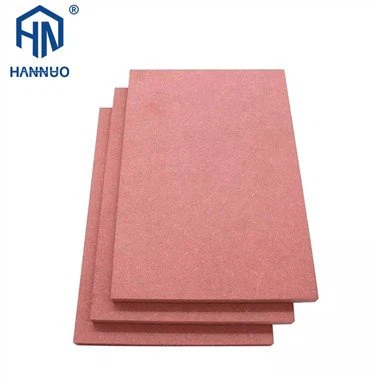
Raw Materials For Making Particle Board
Jul 17, 2022
The raw materials for making particleboard include wood or lignocellulosic materials, adhesives and additives, the former accounting for more than 90% of the dry weight of the board. Wood raw materials are mostly obtained from inter-forest logging, small-diameter timber (usually below 8 cm in diameter), logging residues and wood processing residues. Processed into flakes, strips, needles, granular wood chips, shavings, wood wool, sawdust, etc., called scrap. In addition, non-wood materials such as plant stems and seed shells can also be made into boards, which are often named after the materials used, such as hemp stalk (particle) board, bagasse (particle board), etc. Adhesives are mostly urea-formaldehyde resin glue and phenolic resin glue. The former has a light color and low curing temperature, and has a good gluing effect on particleboards of various plant materials such as wheat straw and rice husk. The hot pressing temperature is 195-210 °C. It is widely used in production, but has the disadvantage of releasing free formaldehyde to pollute the environment. The shape of the shavings is the decisive factor for the quality of the particleboard, so it is first necessary to produce qualified shavings. Particles left over from wood processing can be reprocessed for use as a core layer for particleboard. Surface shavings are mainly produced by special processing of high-grade residues (wood truncated, board edges, etc.) in harvesting or processing. The length, thickness and width of shavings vary according to the production method and the core or surface layer used to make them. The processing equipment for preparing shavings includes chippers, re-shredders, grinders and fiber separators, and the cutting methods include cutting, cutting and crushing. In order to obtain high-quality shavings, it must go through the processes of primary crushing, grinding, re-crushing and screening. The processed shavings have an initial moisture content of approximately 40-60%, and the moisture content of the core layer that meets the technological requirements is 2-4%, and the surface layer is 5-9%. Therefore, the shavings with different initial moisture content should be dried with a dryer to achieve a uniform final moisture content. The dried shavings are then mixed with liquid glue and additives. Usually, 8 to 12 grams of sizing is applied per square meter of surface area of the shavings. The sizing material is sprayed from the nozzle into particles with a diameter of 8-35 microns, forming an extremely thin and uniform continuous adhesive layer on the surface of the shavings. The shavings after sizing are then paved into slabs whose thickness is generally 10 to 20 times the thickness of the finished product. Pre-pressing and hot-pressing are available. The pre-compression pressure is 0.2-2 MPa, which is carried out with a flat press or a roller press.